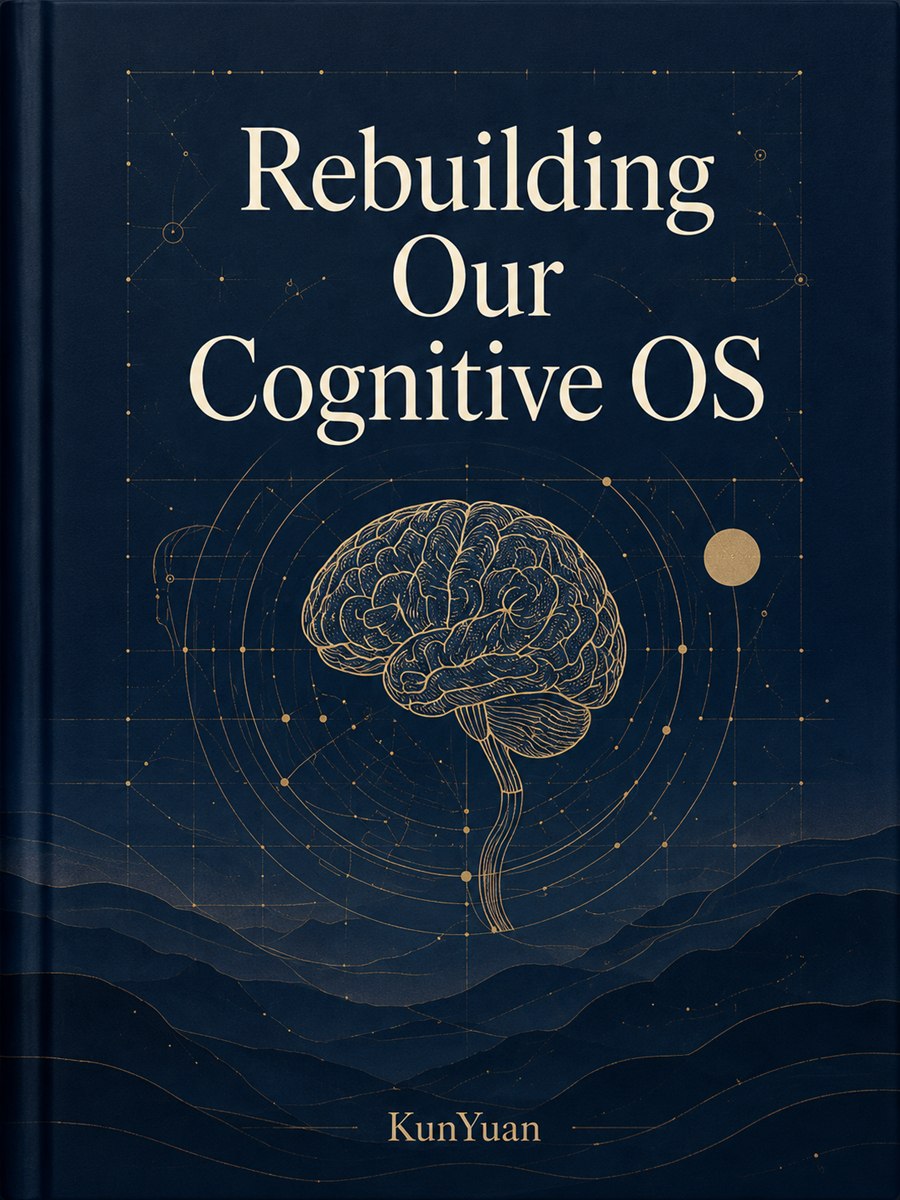
We often assume that stronger thinking naturally leads to deeper cognitive change. We read more, we learn better methods, and we become more analytical, more efficient, and more capable of searching, comparing, reasoning, and expressing ourselves. AI can now amplify these abilities even further. Yet a strange gap remains: a person may become far more capable while continuing to return to the same familiar interpretations, judgments, priorities, and patterns of life.
Rebuilding Our Cognitive OS begins precisely at that gap. Why can our cognitive capabilities become much stronger while the long-term organization that shapes how we understand, judge, and choose remains largely unchanged? The book separates greater capability from change in the deeper layer that coordinates those capabilities across time.
“Cognitive OS” is a metaphor for the cross-temporal organization of cognition. It does not suggest that the Human mind literally contains a computer operating system, nor that a person is software waiting to be optimized. The term is simply a way to make visible the usually hidden relationships through which attention, questions, concepts, evidence, judgment, action, and feedback become organized over time.
If the first book asks how I remain present in my own formation, the second moves one level deeper: how did this present-day “I” come to understand, judge, and respond to the world in the ways that now feel so natural? The body participates. Relations of dependence participate. Language, culture, education, and institutions participate. Past interpretations settle into today’s cognitive defaults, and the shared world has already entered us before we become capable of fully reflecting on how it happened.
But the book refuses the conclusion that formation means destiny. Understanding where we come from is not an attempt to give childhood, culture, history, or past experience permanent authority over the future. It is meant to help us distinguish where we naturally begin from where we must necessarily end.